
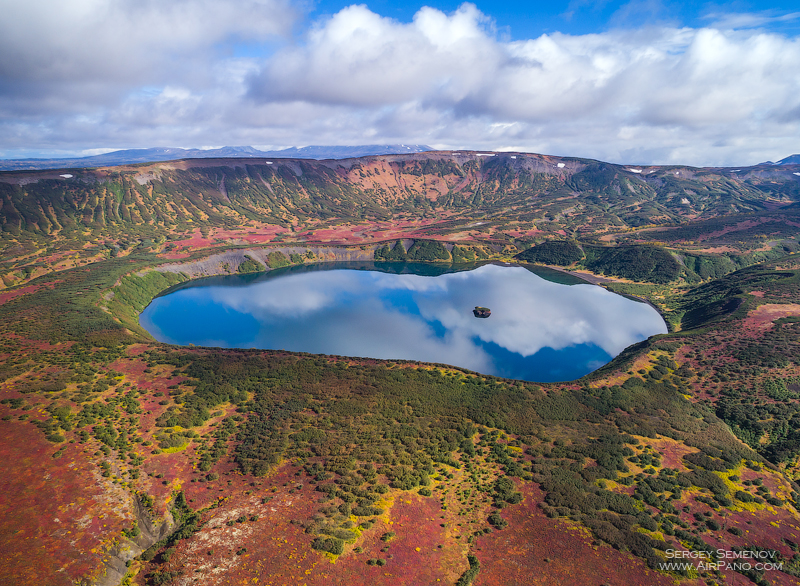
Uzon volcanic caldera, Kamchatka, Russia
The Kamchatka Peninsula is located in the northeastern part of Russia. It has a total area of 270,000 square km with three wildlife refuges, 5 national parks, 8 federal and 23 local nature reserves, 105 natural monuments, 2 sanatorium-resort zones, and many other protected areas.
Kamchatka's main attractions are volcanoes. Images of the volcanoes are even depicted on the flag and coat of arms of both Kamchatka Krai and Petropavlovsk-Kamchatskiy, the main city of the region. In total there are more than 300 Kamchatka volcanoes, but only 30 of them are active.
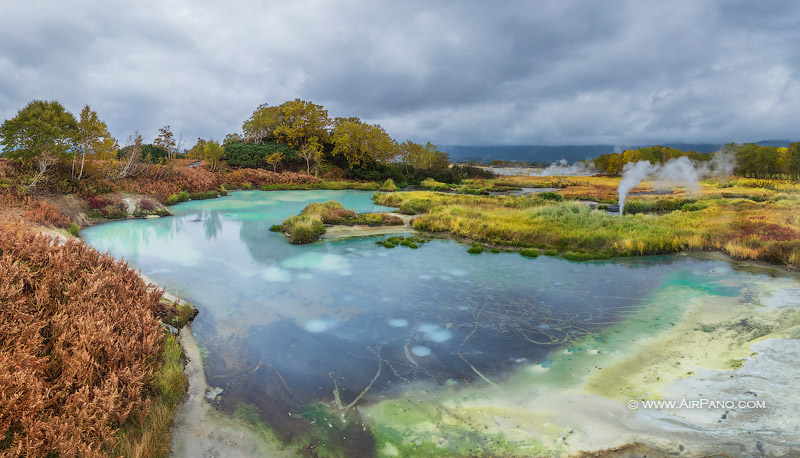
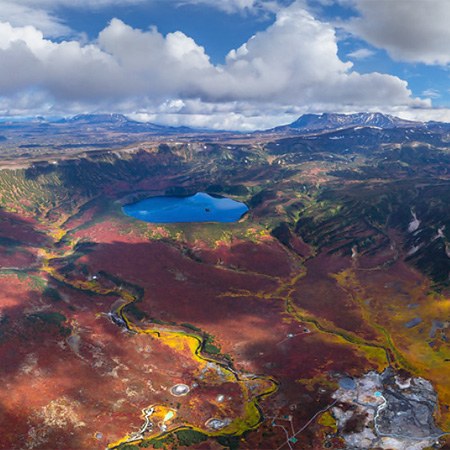
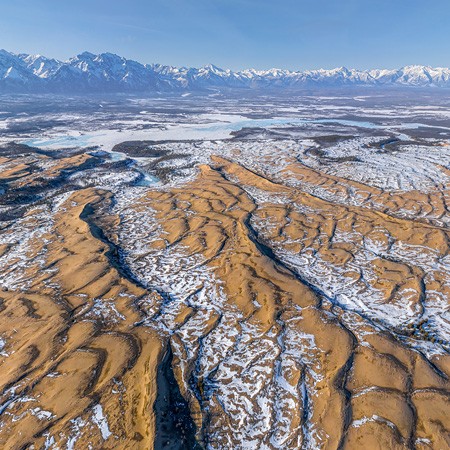
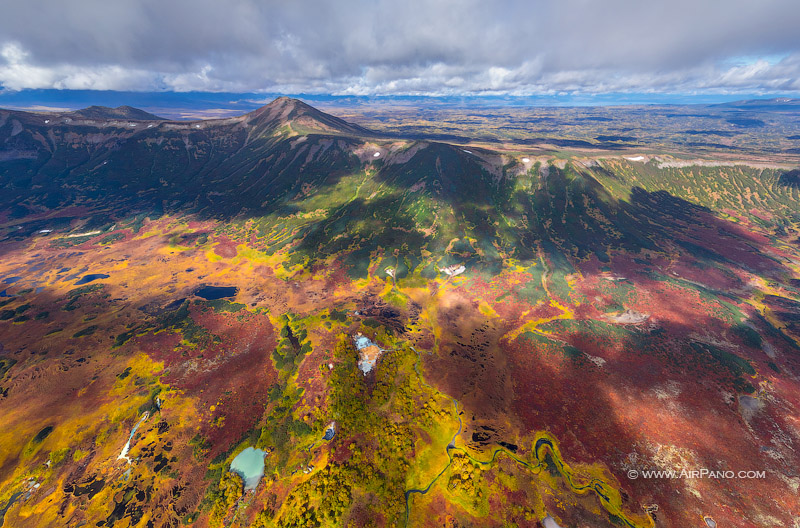
Since 1996 Kamachatka volcanoes and adjoining territories are listed as UNESCO World Heritage Sites. This area is known for beautiful landscapes and a huge variety of biological species. Uzon volcanic caldera in Kronotsky Nature Reserve offers one of the most amazing sceneries you'll ever see.
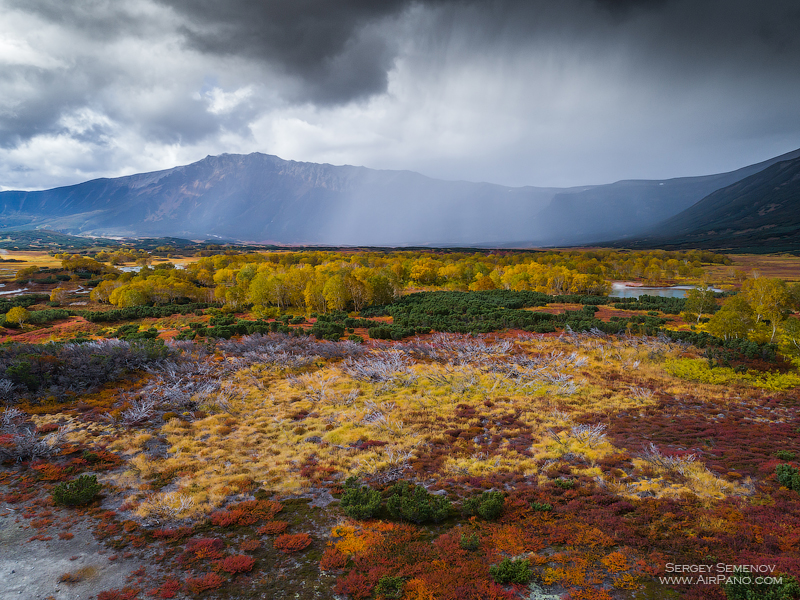
Uzon Volcanic Caldera (a cauldron-like collapse) was formed about 40,000 years ago on the site of the volcano that was destroyed by a series of eruptions. Powerful explosions left a crater with a diameter of about 10 kilometers and total area of 150 square kilometers, framed by steep ledges, sometimes reaching 800 meters high.
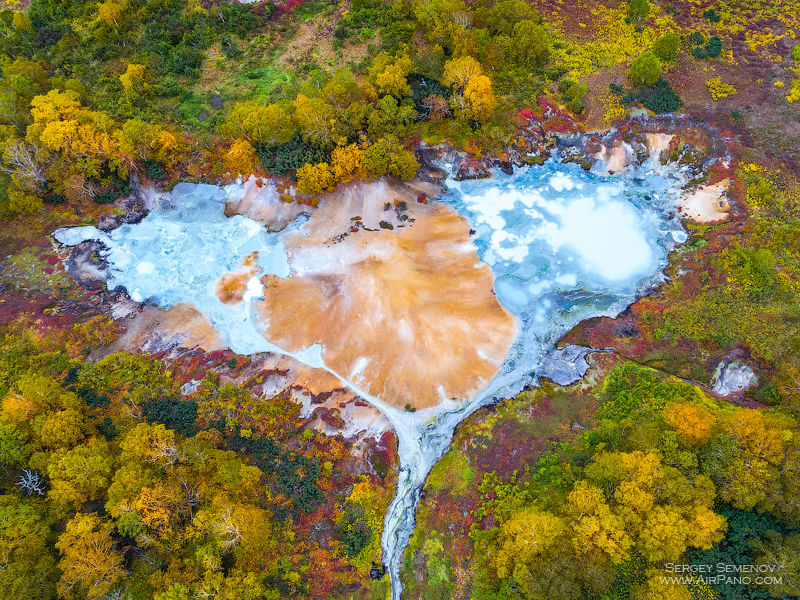
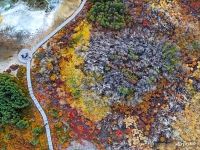
Since that time Uzon never erupted: it is not an active volcano, but not a completely extinguished one either. Just like an open air museum, this unique volcanic territory offers you almost all Kamchatka places of interest: both hot and narzan mineral water springs, mud pots, volcanoes, lakes, and streams.
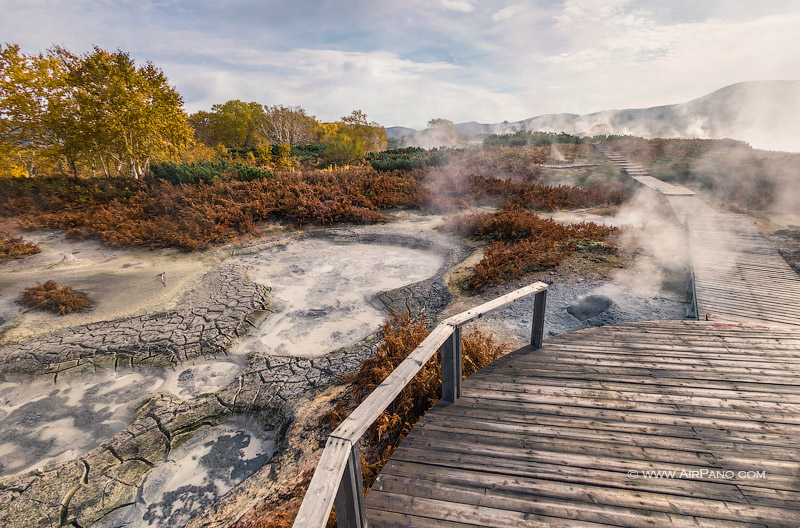
There is Lake Dalny in the eastern part of Uzon caldera. The lake fills one of the largest explosion craters with diameter 1.65 km. Central Lake, one of the biggest and coldest lakes of the region is located in the western swamped part of caldera. One more lake called Bannoe is located nearby as well. It never freezes and its water temperature can reach as high as +40°C, even during wintertime.
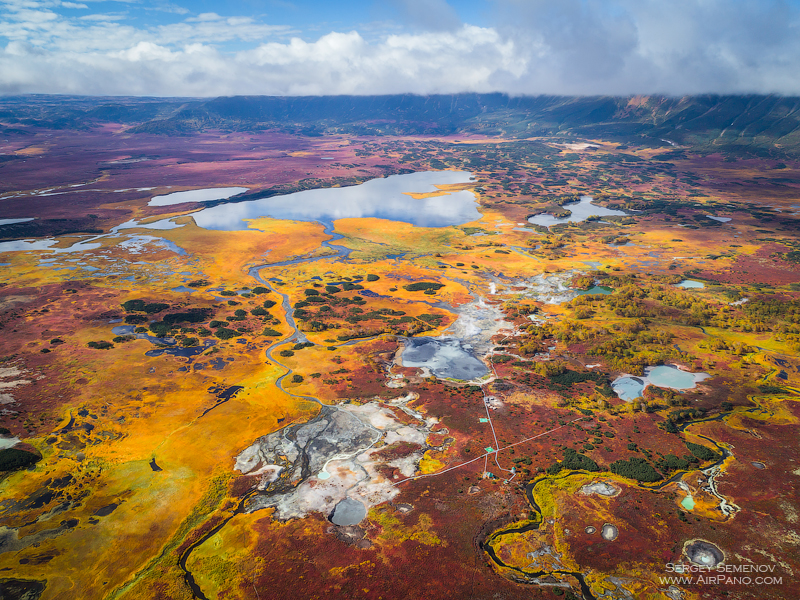
The most prominent hydrothermal activity is evident in the central part of Uzon caldera, which has a shape of a narrow strip only 400 meters wide and 2.5 — 3 kilometers long. Boiling liquids of many different types erupt from tectonic cracks. There are 100 springs and over 500 other hydrothermal manifestations.
One of Uzon caldera famous sights is "Sculptor" mud pot. This unique hot mud pot literally "sculpts" rose-like formations every few seconds. Moreover, in 2008 active geological processes led to the formation of a new geyser — Mutny — with water shooting up to 6 m high.
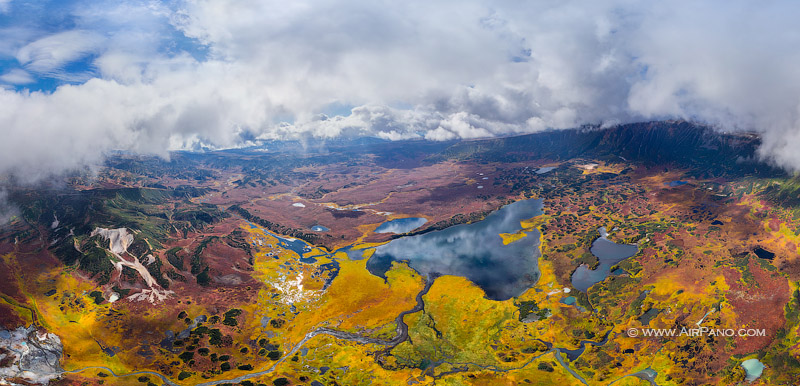
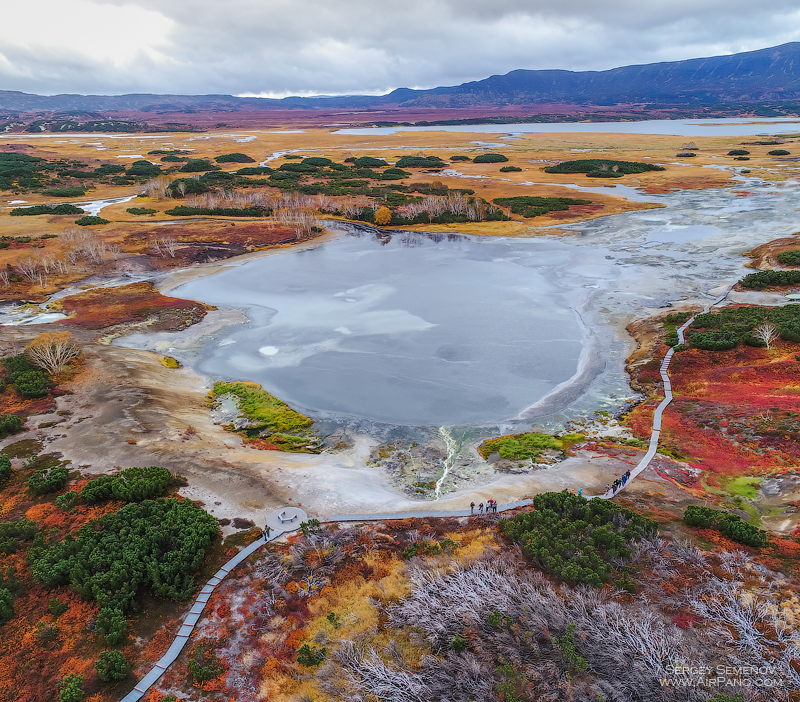
Uzon caldera is open to tourists, but with certain limitations. Naturally these places are very dangerous: you can easily fall into the boiling clay or inhale poisonous fumes. This is why special walkways and paths are made for tourists. There are also special helicopter tours available for visitors.
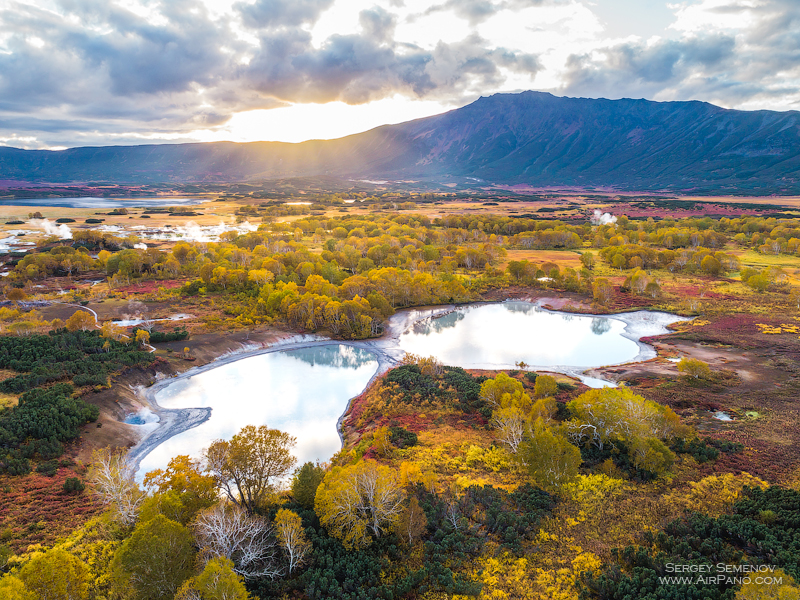
As you can imagine, above mentioned adventures require visiting Kamchatka in person, whereas our panoramas allow you to fly over its major attractions in a very easy, fast, and safe mode!
AirPano team would like to express our gratitude to the admistration of the Kronotsky Biosphere Reserve and personaly its direcror Shpilenok Peter and inspectors Subbotina Elena and Pisarenko Petr for perfect organization of the photo shoot, and warm welcome.
Video and photos by Sergey Semenov, Stas Sedov, Sergey Shandin and Dmitry Moiseenko. Video stitching by Nickolay Denisov
6 April 2018
Read more
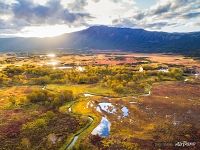 Uzon from drone
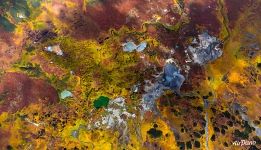 Uzon
Uzon
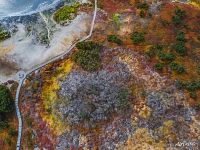 Near Chloride Lake
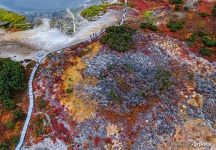 Near Chloride Lake
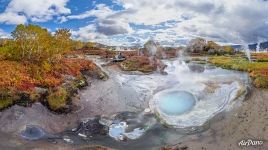 Uzon
Uzon
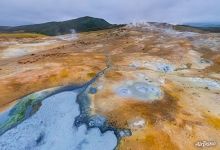 Above acid lake
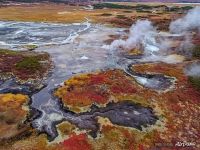 Uzon
Uzon
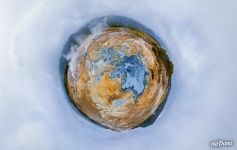 Above acid lake. Planet
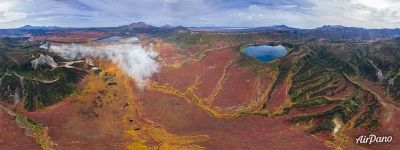 Cloud above Uzon caldera
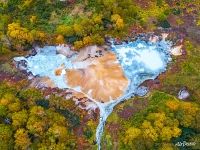 Colorful Uzon
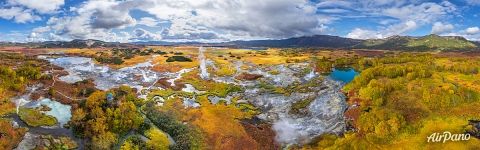 Near observation tower
 Near Chloride Lake